- +91********12
- **********150@gmail.com

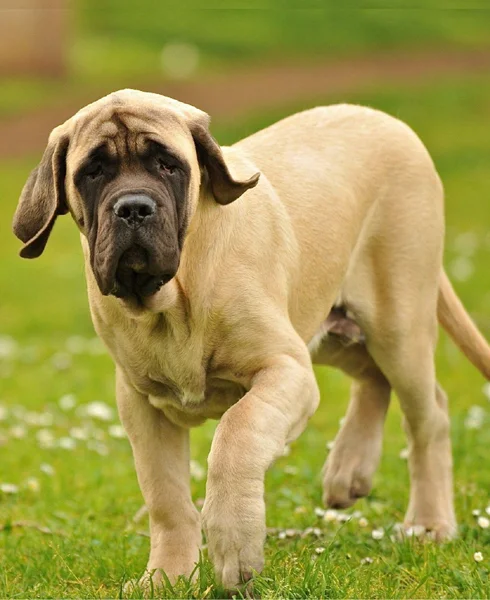

| Category | Giant Dog Breeds |
The English Mastiff is a breed of large dog. The breed is referred to simply as the Mastiff by national kennel clubs, including the United Kingdom's Kennel Club and the Fédération Cynologique Internationale. They perhaps descended from the ancient Alaunt and Pugnaces Britanniae, with significant input from the Alpine Mastiff in the 19th century. Distinguished by its enormous size, massive head, short coat in a limited range of colors, and always displaying a black mask, the Mastiff is noted for its gentle and loving nature. The lineage of modern dogs can be traced back to the early 19th century, but the modern type was stabilized in the 1880s and refined since. Following a period of sharp decline, the Mastiff has increased its worldwide popularity. Throughout its history the Mastiff has contributed to the development of a number of dog breeds, some generally known as mastiff-type dogs, or, confusingly, just as "mastiffs".
1.Life expectancy: 6 – 12 years
2.Origin: England
3.Height: Female: 70–91 cm, Male: 70–91 cm
4.Weight: Female: 54–77 kg, Male: 73–100 kg
5.Temperament: Good-natured, Affectionate, Dignified, Courageous, Protective, Calm
6.Colors: Brindle, Fawn, Apricot
The proper Mastiff should be a combination of grandeur and good nature, courage and docility. They're always dignified, never shy or vicious.
A well socialized Mastiff treats normal strangers with polite aloofness but will step between you and anyone or anything that seems threatening. Normally it's not necessary, but if the threat continues, they'll escalate their response as needed. Thieves who are foolish or unlucky enough to break into a home with a Mastiff will find themselves cornered until a family member arrives to call the police.
Mastiffs dislike conflict between family members as well and will step between arguing spouses or a parent punishing a child. While they might look tough on the outside, the Mastiff is a sensitive dog who can become shy, fearful, or aggressive if mishandled. Never treat your Mastiff roughly or allow anyone else, including children, to do so.
Temperament is affected by a number of factors, including heredity, training, and socialization. Puppies with nice temperaments are curious and playful, willing to approach people and be held by them. Choose the middle-of-the-road puppy if you have an option, not the one who's beating up their littermates or the one who's hiding in the corner.
Meet at least one of the parents if you can usually, the mother is the one who's available--to find out if they have nice temperaments that you're comfortable with. Meeting siblings or other relatives of the parents can also be helpful for evaluating what a puppy will be like when they grow up.
Like every dog, Mastiffs need early socialization--exposure to many different people, sights, sounds, and experiences--when they're young. Socialization helps ensure that your Mastiff puppy grows up to be a well-rounded dog.
Enrolling them in a puppy kindergarten class is a great start. Inviting visitors over regularly, and taking your pup to busy parks, stores that allow dogs, and on leisurely strolls to meet neighbors will also help them polish their social skills.


